28–30 May 2026
Circular Design for Urban Transformation
CiD Conference Hannover
Circular Regeneration
·
·
·
Circular Constellations
·
·
·
Circular Processes
·
·
·
Circular Regeneration · · · Circular Constellations · · · Circular Processes · · ·
ABOUT
The CiD Conference Hannover is a three-day event around a programme of research sessions, discussions, and invited lectures.
The conference Circular Design for Urban Transformation – organised by the CiD CircularDesign Innovation Alliance, co-funded by the European Union – invites researchers and practitioners to explore how circular approaches can drive urban regeneration. Since sustainability and climate targets call for transformative and adaptive models to evolve cities - beyond consumption of resources and expansion - circular thinking and circular economy offer inspiration to rethink urban spaces, governance, and socio-economic processes. The conference envisions Circular Design as a key approach for urban transformation, presents and discusses results of the work of the CiD Alliance, and discusses novel skills and the innovatory flow of knowledge between research, education, and professional practice. The CiD Conference Hannover is a three-day event around a programme of research sessions, discussions, and invited lectures.
Registration is now closed
If you have any questions, feel free to reach out via email.
-

Circular Regeneration
-
Circular Constellations
-
Circular Processes
The conference is structured around three thematic themes:
-
Discusses a circularity-driven approach to urban regeneration – regarding urban space, communities, economies, and nature – based on new cooperation, entrepreneurship, and a discovery of architectural assets. We proposecircular regeneration as a key paradigm for urban transformation beyond linear growth, demolition, and replacement models. This discussion connects life-cycle thinking for buildings, urban spaces, and infrastructures with adaptability, resilience, and the transformative capacities of cities and society. Thus, Circular Design can be understood not only in terms of material efficiency or ecological performance, but as a spatial and socio-economic process that activates new forms of value in existing cities. Discovery and regenerative approaches are discussed in regard to underused or obsolete urban elements, buildings, construction products, new platforms for social and economic innovation, new forms of entrepreneurship, collective organisation, and local production. We are interested in how regenerative approaches are driven and shaped by actors, organisational innovation, practices, and policy frameworks, how they are enabled by and changing urban governance. Design-based research, empirical studies, and practice-led contributions contribute to reflect on how circular regeneration redefines urban values, resilience, and urban and territorial transformation across different contexts and scales.
-
Discusses new constellations of actors, new forms of entrepreneurship, flows – of resources, knowledge, skills –,and urban networks to drive a circular change of the design and construction economy. We propose Circular Design as an innovation perspective to connect creative practices and creative economy, business innovation, and social entrepreneurship in and between recycling and bio-based approaches. We aim to explore theinteraction between public, private, community, and hybrid actors operating across sectors, scales, and territories. Circular Design, in this sense, can be understood as moving relational, socio-economic, and entrepreneurial constellations, in which value is generated through cooperation, knowledge exchange, and new forms of entrepreneurship. It can contribute to urban transformation by activating local networks, building urban value chains, and fostering inclusive, place-based, and sustainability-oriented innovation. We are interested inhow circular networks and entrepreneurial ecosystems shape urban transformation over time, with particular attention to the role of intermediaries, grass-roots initiatives, community-led enterprises, and institutional actors. A discussion of diverse actor constellations can support our understanding of resilient, adaptive, and socially embedded urban transformation, through creative reuse and bio-based practices across different urban and territorial contexts.
-
explores the engagement of stakeholders and urban society, policy and governance frameworks, and urban strategies driven by and enabling processes to shape a circular economy in the design and construction sector and to transform cities towards sustainability and resilience. We discuss how circular approaches both challenge and expose the limits of conventional economies, planning and urban strategies, and management models, designing and shaping more adaptive, collaborative, and participatory urban change processes. We investigate gaps between circular innovatory initiatives – as dynamic, experimental, and often fragile processes – and actual transformation trends and governance frameworks. Circular Design approaches can reconfigure engagement models, institutional roles, decision-making mechanisms, and power relations. They can reveal tensions between innovation and regulation, flexibility and accountability. We are interested in co-design and co-productionpractices, hybrid public–private–civic cooperation processes, critically assessing their capacity to enable entrepreneurial and social innovation, collective action, and shared responsibility for urban resources. And we ask about enabling or restraining policy and regulatory frameworks, institutional learning, policy experimentation, regulatory lock-ins, and misalignments between urban strategies and governance structures. From this perspective, Circular Design extends beyond spatial and material considerations towards designing processes of change.
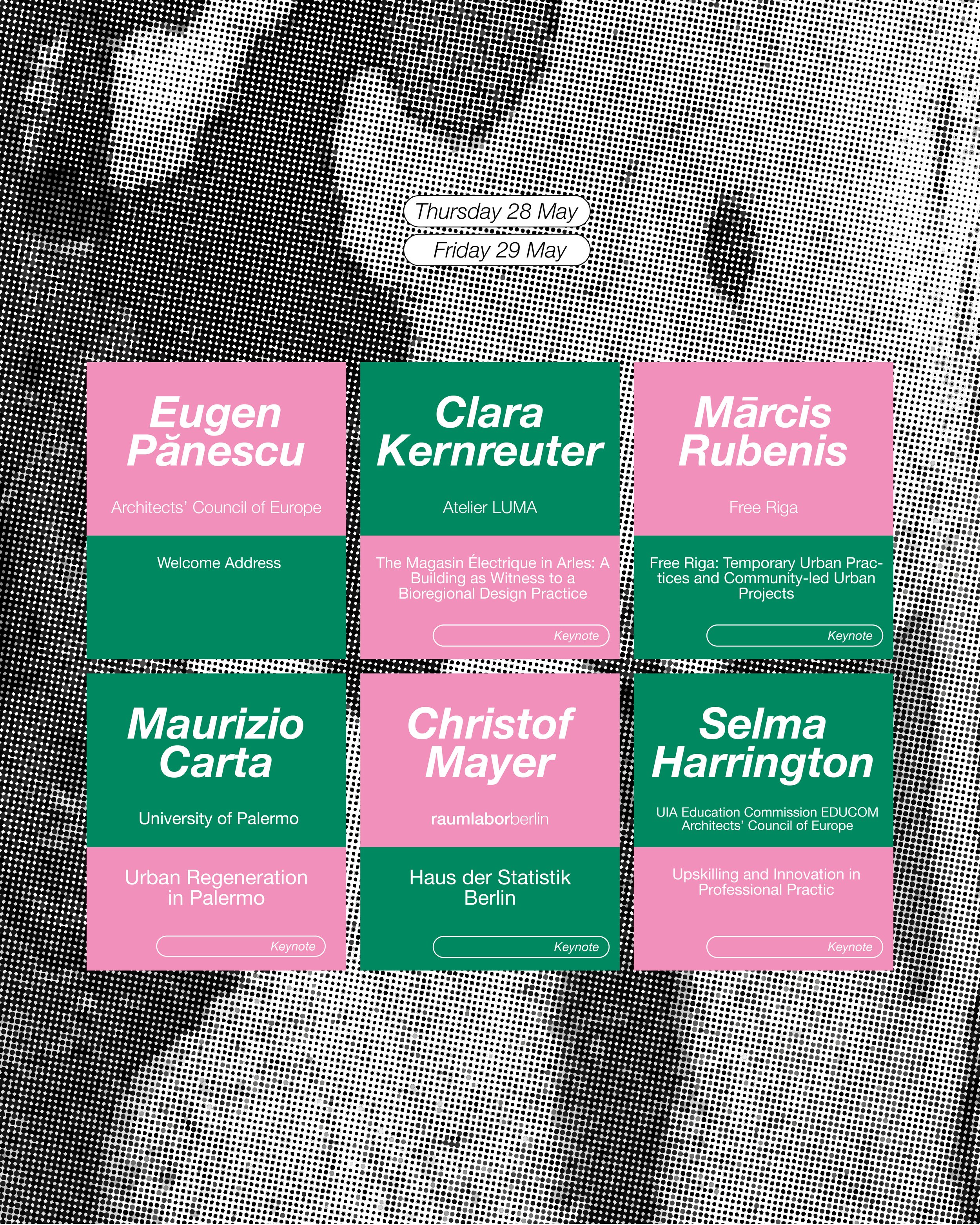
Keynotes
Programme 28–30 May 2026
Thursday 28 May
-
09:00 Registration (Sculpture hall)
09:30 Welcome (Drawing hall B075)
Introduction CiD. Innovation Alliance
Jörg Schröder, Leibniz University Hannover
Dean for Research of the Faculty of Architecture and Landscape, Leibniz University Hannover,
Board member of EAAE, the European association of Architecture Schools
CiD Coordinator
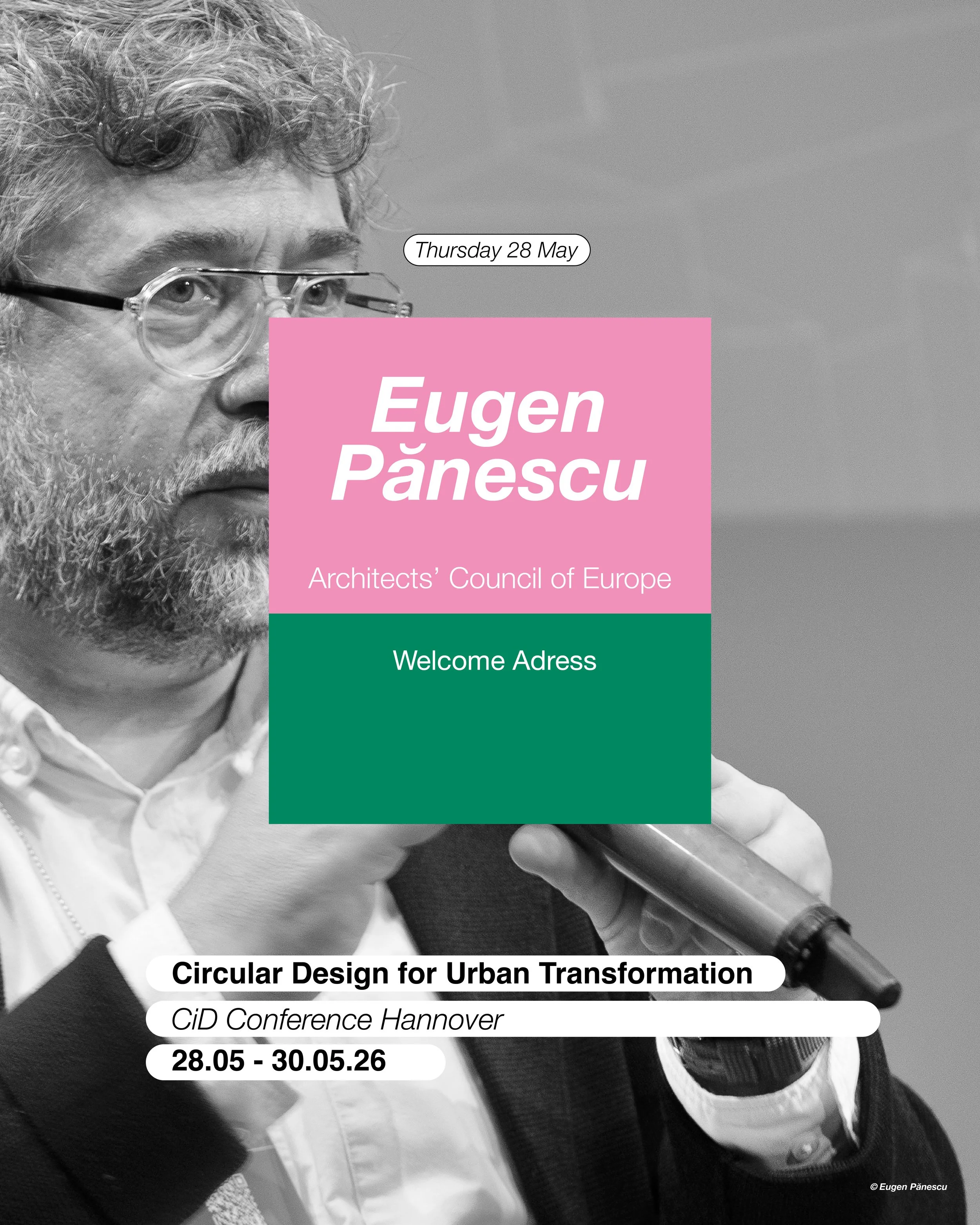
Welcome address
Eugen Panescu, Architects’ Council of Europe
Board member of ACE, Architects’ Council of Europe, the European association of Chambers of Architects
Robert Marlow
President of the Chamber of Architects of Lower SaxonyTatjana Sabljo
President of the Lower Saxony Section of BDA Association of German Architects
-
10:00 Roundtable into Circular Design for Urban Transformation (Drawing hall B075)
Moderator: Karina Hidalgo, Architects’ Council of Europe
Jörg Schröder, Leibniz University Hannover
Silvia Pericu, University of Genova
Fiona Demeur, IAAC Advanced Architecture Catalonia
Martynas Germanavičius, Architektūros fondas
11:15 Coffee break
-
11:30 Key Lectures‘ Dialogue (Drawing hall B075)
Moderator: Anna Pape, Leibniz University Hannover
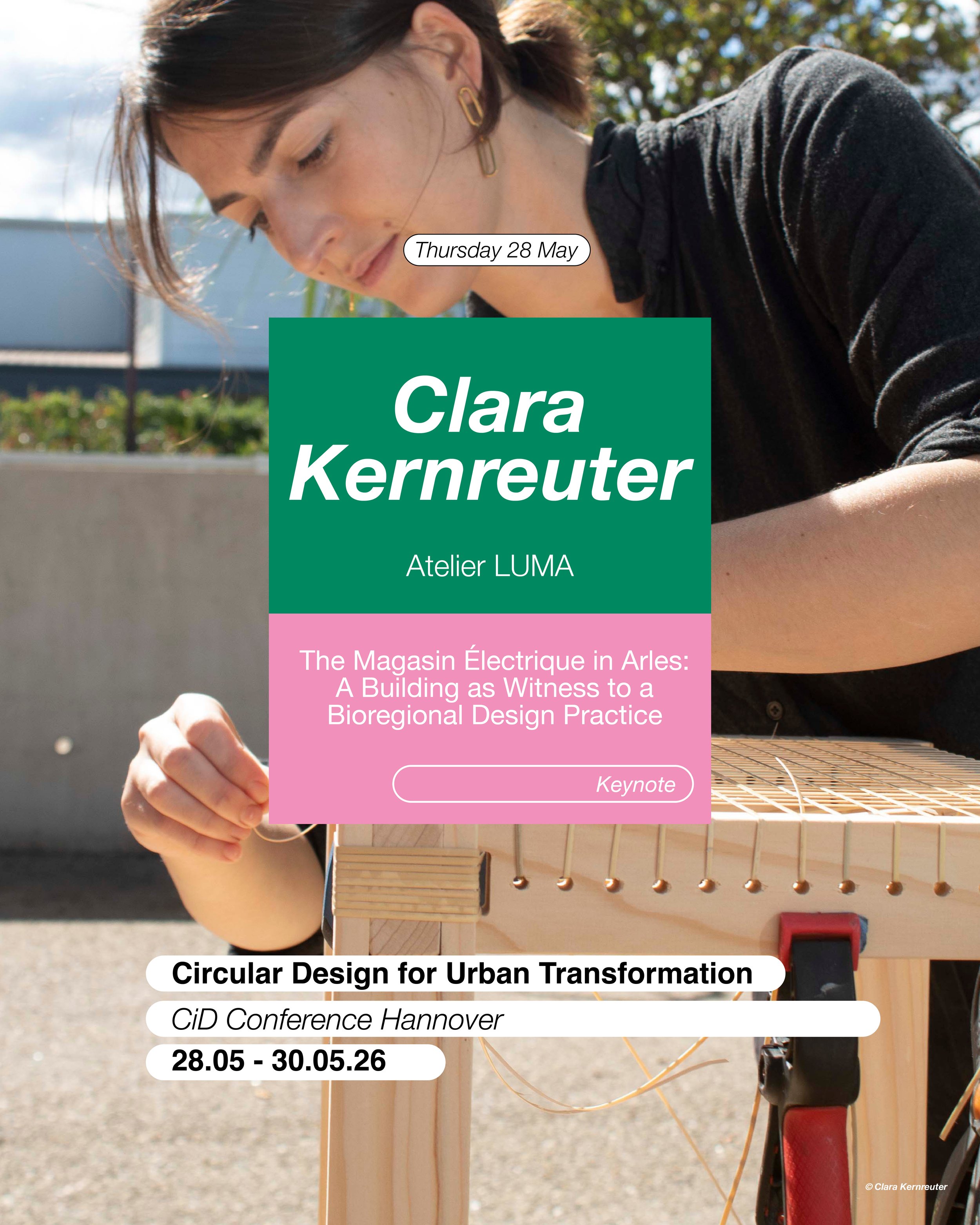
The Magasin Électrique in Arles: A Building as Witness to a Bioregional Design Practice– Clara Kernreuter, Atelier Luma
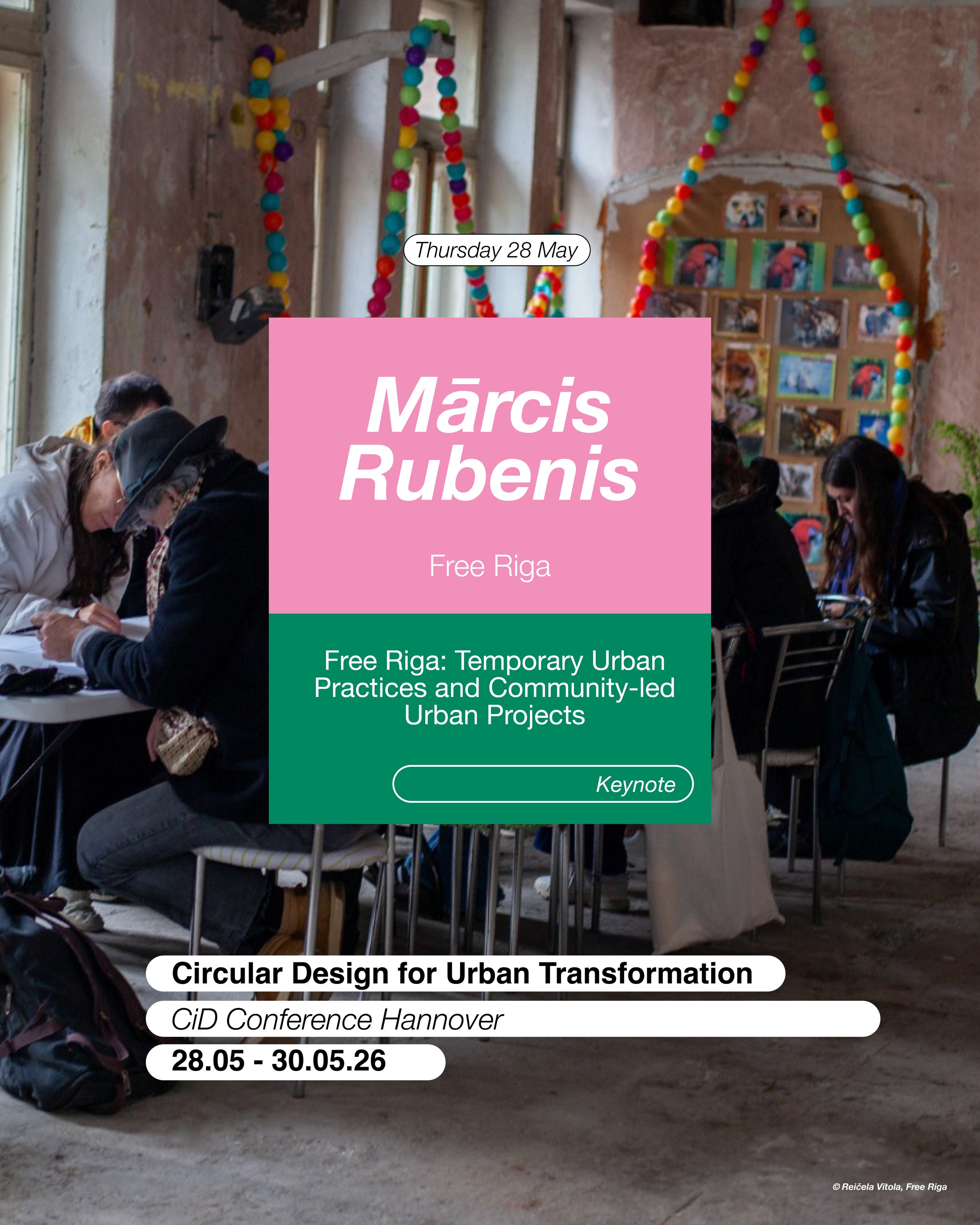
Free Riga: Temporary Urban Practices and Community-led Urban Projects – Marcis Rubenis, Free Riga
////////////////////////////////////////////////////////////
The Magasin Électrique in Arles: A Building as Witness to a Bioregional Design Practice Why are our neighbourhoods built with cinder blocks and PVC, when our territory offers rice straw, limestone, and raw earth? Since 2016, Atelier LUMA has been testing bioregional design in Arles, mapping undervalued resources, connecting local skills and infrastructure, and building viable production supply chains rooted in the territory. The renovation of the Magasin Électrique (2023) materialised this method: rice-straw insulation, sunflower-stalk plasters, waste-clay tiles, demolition waste rammed earth and terrazzo... Each project clears the path for the next, proving that bioregional design can inspire replicable models, transmit methods, and gradually shift the way we inhabit and build within our territories.
Clara Kernreuter is a craft and product designer based in France, graduated from Ecole Nationale Supérieure des Arts Décoratifs in Paris with a background in social and political sciences. She believes the transition towards sustainable production and construction systems must be led by design, while remaining deeply connected to political, socio-economic, and cultural realities. She works as a designer and project leader at Atelier LUMA, the research and design program of LUMA Arles. Her practice develops on two levels: she has built an expertise in mineral and fiber materials (ceramics, raw earth, stone) adapted to architectural scale and alternative material sources. In parallel, she develops bioregional mapping methodologies to represent local resources, dynamics, and actor networks, supporting projects rooted in their specific ecological, social, and cultural context.
-
Vegetarian and Vegan Lunch in the Sculpture hall
-
Parallel Sessions Circular Regeneration
Moderators: Federica Scaffidi and Riccarda Cappeller, Leibniz University Hannover
Session A / Room B053
Elżbieta Skiba (Lodz University of Technology), Agata Misiejuk-Wąsowska (Warsaw University of Technology), Agnieszka Jurczak-Machcewicz (Silesia University of Technology), Michał Kołodziej (Cracow University of Technology), Justyna Dziedziejko (Warsaw University of Technology): Designing Circular Infrastructure: A Design-Driven Exploration of the Circular Society Framework for Urban Regeneration
Öykü Tok*, Carolin Schelkle*, Niklas Fanelsa (Technical University Munich): Bioregional Narratives and Industrial Realities: Bridging Systemic Gaps in the Adoption of Bio-Based BuildingMaterials
Yuliia Melchenko (Norwegian University of Science and Technology) : Circular Reconstruction: Adaptive reuse and material recovery for post-war urban regeneration in Ukraine
Session B / Room B063
Franziska Sorger (Technical University Munich): Bioregional Weaving in Practice: Activating Circular Competence in Fibre-Based Construction
Jana Schindelhauer: Assembly Jam – Narrative and Curatorial Practices as Catalysts for Circular Material Flows
Michael Wagner (University of Liechtenstein): Beyond Material Loops: Circular Urban Regeneration as Spatial and Procedural Design Practice
15:30 Short break / Sculpture hall
-
(Drawing hall B075)
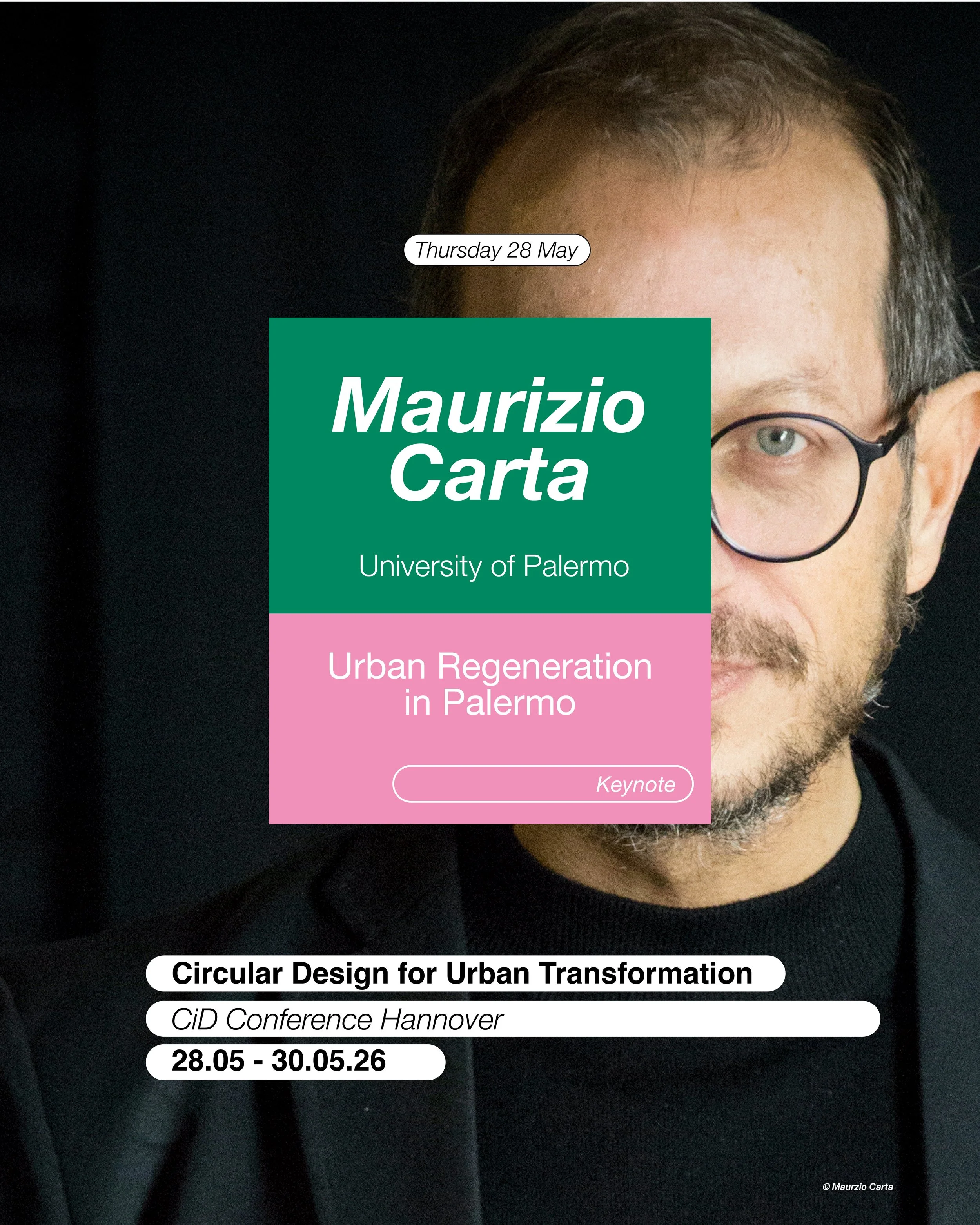
Urban Regeneration in Palermo. In the twentieth century, Western cities were conceived through two great metaphors: perfect machines or ordered organisms, with separate spaces for living, working, and socializing. This idea of a functional city impoverished urban life, depriving it of the tumult of emotions, the diversity of bodies, and above all, the fertile intermingling of spaces typical of pre-industrial urbanity. It is urgent to imagine and design the "fourth space," a hybrid, adaptive, and creative field where living, working, learning, caring, and meeting cease to be separate worlds and blend in ever-changing ways. The fourth space emerges when the first three — living, working, socializing — are hybridized, combined, and consciously multiplied in contemporary urban life. It is a space of mutuality and sharing with a variable geometry that does not follow a predefined hybridization, but mixes places according to the needs of the moment and, above all, those not yet manifested. To design the city of the fourth space, we must begin with public space and notable places: schools and school squares, care spaces, museums and cultural centers, and shared living.
Maurizio Carta is architect, PhD and full professor of urbanism and regional planning at the Department of Architecture of the University of Palermo. Founder and Director of the Augmented City Lab, an international research agency about the cities of the future. He is senior expert in strategic planning, urban design and local development, drawing up several urban, landscape and strategic plans in Italy. He currently is the Deputy Mayor for the urban regeneration of the Municipality of Palermo. He is author of more than 350 publications, the last are Augmented City. A Paradigm Shift (ListLab, 2017), Cosmopolitan Habitat (with J. Schroeder et al, Jovis, 2021), Resilient Communities and the Peccioli Charter (with M. Perbellini and A.J. Lara-Hernandez, Springer, 2022), La città del quarto spazio (Mimesis, 2026).
-
Fishbowl Circular Regeneration (Drawing hall B075)
Moderator: Nele Plutus, Tallinn Business Incubator
Jackie Williams, Leibniz University Hannover
Paulius Kliučininkas. Architektūros fondas
with Maurizio Carta and contributors from the parallel sessions
-
(Sculpture hall)
Moderator: Anna Pape, Leibniz University Hannover
Pecha Kucha by CiD project partners
Preview: Circular Design for Transforming Cities
Issue of Dimensions Journal of Architectural Knowledge
Riccarda Cappeller, Leibniz University Hannover
Presentation: Circular Design books
Fiona Demeur, IAAC Advanced Architecture Catalonia
Federica Delprino, University of Genova
Anna Pape, Leibniz University Hannover
-
Sculpture hall + courtyard
Entrance via Mandelslohstraße
Friday 29 May
-
Moderators: Federica Tenaglia, CNR Research Council of Italy and Silvia Pericu, University of Genova
Session A / Room B053
Jasper Runge (IAAC Advanced Architecture Barcelona): Catva: Bioregional Vaulted Ceilings for Circular Regeneration of Existing Buildings
Massimiliano Cason Villa
(University Iuav Venice): Circular Exhibitions. Life Cycle Assessment as a Framework for Circular Processes in Temporary Exhibition SystemsYssmin Bayoumi, Andrew Vande Moere, Eslam Nofal, Pieter Van den Broeck (KU Leuven): The Role of Craftership in Building Empowering Makerspaces
Session B / Room B063
Marwa Ridoini, Joseline Sierra Montero (MAAK): Rural Networks as Circular Constellations Lessons from Becal and the Oasis of Goulmima
Nishanth Maheshwaran, Vinya Ponnamma: The Unexplored Potential of the Rural to Contribute to the Circular Economy in Planning and Designing
Matti Hänsch: Speculative Typologies for Post-Industrial Regeneration of the Elbe Delta
-
(Drawing hall B075)
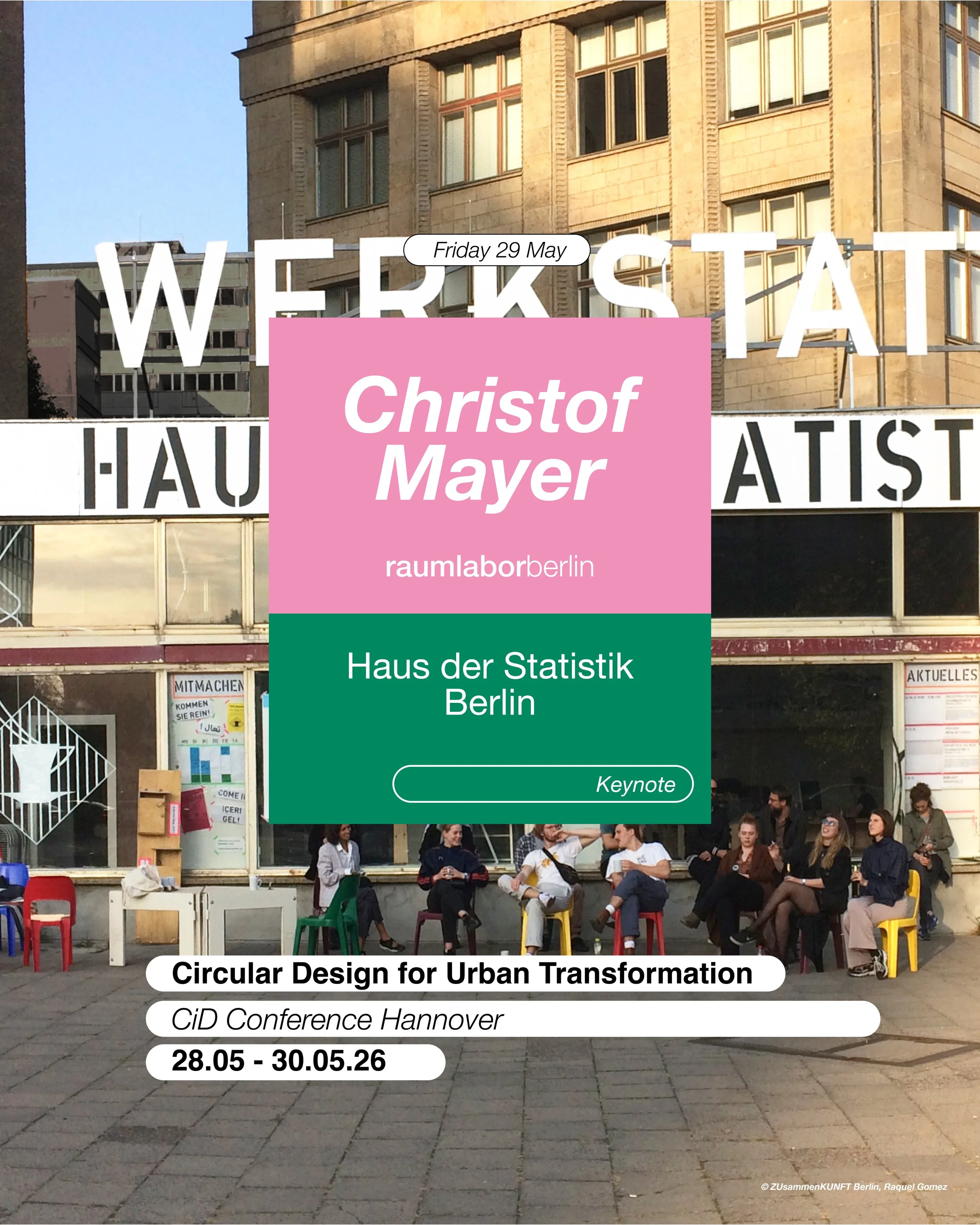
Haus der Statistik Berlin. As a model project, the Haus der Statistik in Berlin is a prime example of collaborative urban development. After standing empty for decades and facing planned sale and demolition, the “Haus der Statistik” initiative succeeded in 2016 in sparking innovative development through a campaign. The aim is inclusive and sustainable urban design that creates space for new ideas, co-creation and shared use – a vibrant place by and for everyone. The Haus der Statistik takes a stand against property speculation: rather than short-term profit, the focus here is on the common good. Public spaces and buildings are to be permanently preserved and used – as places for social interaction, cultural production and democratic participation.
Christof Mayer is an architect who lives and works in Berlin. He is one of the co-founders of Raumlabor, a group that emerged in 1999 out of a shared interest in an expanded understanding of architecture. This has since established itself as an urban practice. Raumlabor’s working method is situational and action-oriented. The focus lies on the collaborative production of space as an open process. His work is dedicated, amongst other things, to property policy, specifically the intersections of networking, urban development and socio-spatial transformation. He was Artist in Residence at Monash University (2014), Artistic Director of the “Making Futures School” (2019), as well as Visiting Professor at the Berlin University of the Arts (UdK) (2018–2020) and Professor at the Bergen School of Architecture (2017–2025). He is also a member of the urban development cooperative ZUsammenKUNFT Berlin (ZKB), which created a model of cooperative urban development with the “Haus der Statistik”.
-
(Drawing hall B075)
Moderator: Fiona Demeur, IAAC Advanced Architecture Barcelona
Eglė Kliučinskaitė, Architektūros fondas
Pilar Bolumburu, Materiom Ltd.
Federica Scaffidi, Leibniz University Hannover
with Christof Mayer and contributors from the parallel sessions
11:30 Coffee break
-
Moderator: Marite Guevara, Ersilia Foundation
Co-production of knowledge: Anna Pape, Leibniz University Hannover
Innovative academic courses: Federica Delprino, University of Genova
Accelerator: Nele Plutus, Tallinn Business Incubator
Continuous Education: Alessandro Pernice, ARCES Palermo
Observatories: Eleonora Ambrosi, ALDA European Association for Local Democracy
-
Vegetarian and Vegan Lunch in the Sculpture hall
-
Moderation: Alessandro Pernice, ARCES
Rebekka Wandt, Leibniz University Hannover
Jackie Williams, Leibniz University Hannover
with young professionals and students
-
Moderators: Concetta Montagnese, CNR Research Council of Italy and Federica Delprino, University of Genova
Session A / Room B053
Edyta Skiba, Małgorzata Hanzl (Lodz University of Technology): Circular City Strategies in Europe: A Comparative Governance Analysis of Inner Six and Visegrad Group cities
Tyler Ebanja (CommonGround Architecture and Design): Vernacular Assemblages:Plants, Architecture and Circular Community Wealth at Wolves Lane Centre
Constantin Alexander (Leuphana University Lüneburg): The Obsolescence-Persistence- Resilience-Continuum
Session B / Room B063
Ilaha Abasli (Technical University Delft): Fair Repair: Centring Labour and Skills in Just Urban Circular Transitions
Anna Maria Colavitti, Beatrice Loda, Virginia Onnis (University of Cagliari): From Community Engagement to Bioregional Governance
Fernanda Gómez Saenz
(Leibniz University Hannover): Territorial Regeneration as a Practical Mechanism for Reweaving Fragmented Urban Agglomerations. The Case of Puerto Montt and Puerto Varas
16:00 Short break ( Sculpture hall)
-
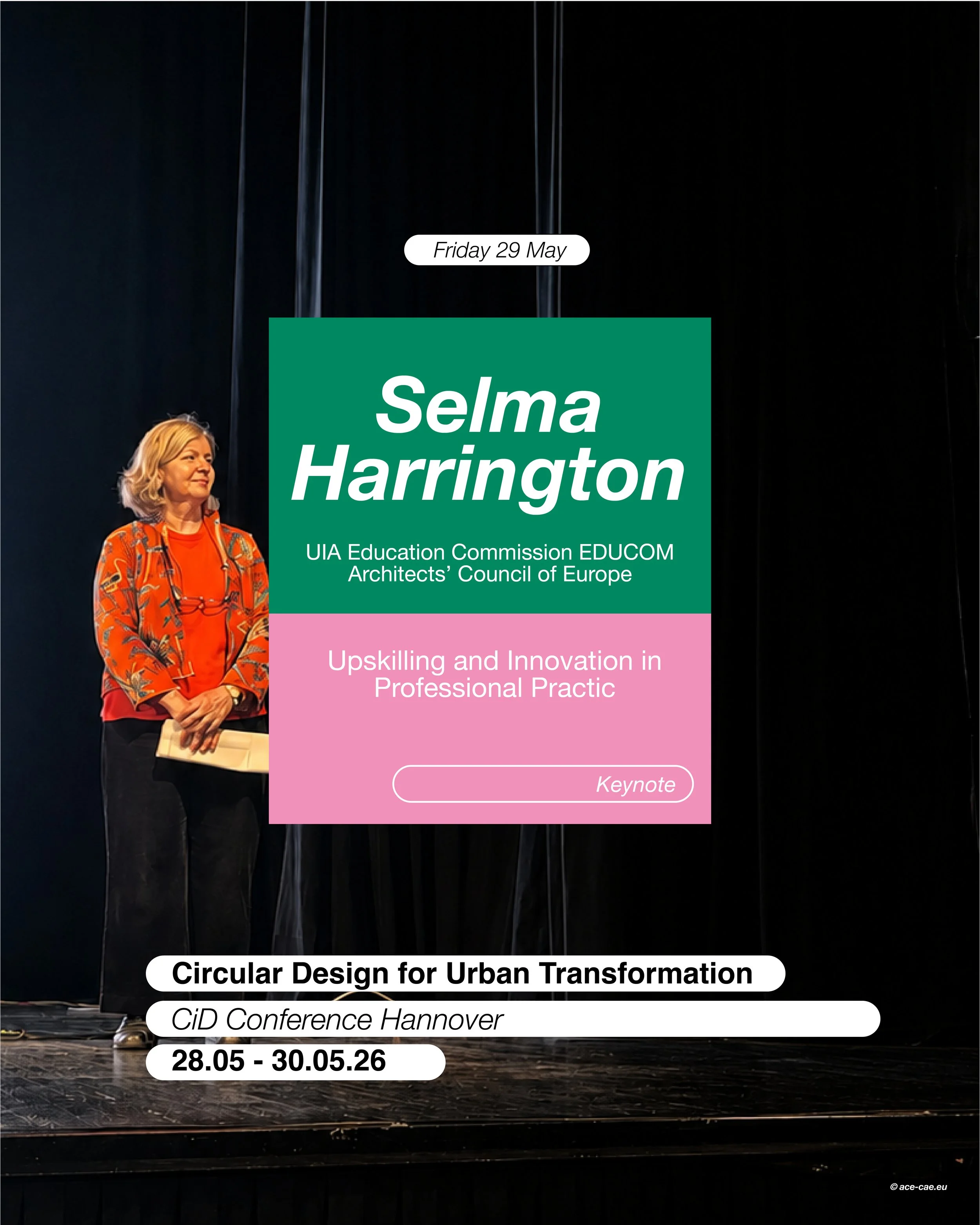
(Drawing hall B075)
Upskilling and Innovation in Professional Practice. Founded at intersection of cultural, technical and social disciplines, the architectural profession is characterised by resilience and adaptability. Today, it is again at a pivotal transformation moment, requiring adaptation to and anticipation of rapidly changing demands. Architects are required to embrace emerging technologies, confront environmental challenges through design action. That requires a complex interplay between practice, life long learning and public policy and necessitates interdisciplinary collaboration and deeper engagement with ethical and business dimensions of practice. Architects are increasingly seen as advocates for sustainable and equitable development, which demands involvement in policy-making processes previously peripheral to professional identity. That requires balancing technical proficiency with creative and critical thinking, and for practices to extend beyond traditional boundaries where architects contribute to community resilience and public welfare through informed, thoughtful design. Global challenges and diverse local contexts require culturally responsive approaches to education and practice of architecture.
Architects, educators, and policymakers face imperative to foster environments where innovation flourishes and ethics guide processes in response to the urgency of climate action and circular economy integration. That calls for a recognition of the transformative potential and challenges of artificial intelligence and digital tools, the necessity of interdisciplinary collaboration beyond traditional professional boundaries, sensitivity to cultural context and impact of architectural models and solutions to health and wellbeing throughout design process. The continuous professional development has an essential role to play in maintaining relevant expertise throughout careers. Ability to pro-actively engage with these challenges will be the key to maintain the vitality and relevance of architectural profession and its ability to contribute significantly to global societal betterment.
Dr. Selma Harrington MRIAI HonAIA is a Co-director of the UIA Education Commission EDUCOM and a Past-President of the Architects Council of Europe (ACE) and a current Chair WG EU-funded projects. With insights rooted in international practice of architecture, she is a published author and a Member of International Review Panel for academic journals Archnet-IJAR and AAeU. She is an experienced reviewer and expert in a number of EU funded projects dedicated to a multi-level engagement, co-creation and trans-disciplinary collaboration. Championing smaller, accession and candidate countries from the Western Balkans, she has initiated and developed a NEB Forum Bosnia and Herzegovina, which secured a Public Vote Winner Award at NEB Festival 2024 and a grant from the NEB Academy for the training programme “Navigating Sustainability, Conservation & Circularity in the Historic Built Environment”. Her academic interests include 20th century architecture and urbanism, critical and contextual heritage discourse and place making.
-
(Drawing hall B075)
Moderator: Paulius Kliučininkas. Architektūros fondas
Martynas Germanavičius, Architektūros fondas
Helen Arme, Tallinn Business Incubator
with Selma Harrington and contributors from the parallel sessions
-
(Drawing hall B075)
18:00 End of the conference
Saturday 30 May
10:00 Site visits and explorative walks in Hannover
Call for abstracts!
Submissions are closed
〰️
Many thanks for all the great abstracts
〰️
Submissions are closed 〰️ Many thanks for all the great abstracts 〰️
15 March 2026: Submission of abstracts
7 April 2026: Notification of acceptance
15 April 2026: Registration deadline
15 May 2026: Submission of first version of papers 15 June 2026: Submission of final version of papers
The conference welcomes both theoretical and empirical contributions, as well as design-based and practice-led research, including critical reflections on the limits, contradictions, and governance challenges of circularity.
Submission Guidelines:
-
1. An abstract limited to 3000 characters (incl. spaces) + 5 keywords, max 10 key bibliogra- phic references, 1 graphical abstract and 2 images via Easychair by 15 March 2026.
2. Please include in the abstract a reasoning about the role of skills and the flow of knowledge between research, profession, and education.
3. Abstracts should describe the research objective, research methods, main results and relevance to the conference theme.
4. Multiple-authored abstracts are eligible.
5. Please indicate which track you wish to submit your abstract to.
6. Add a short CV directly in the submission form (800 char).
Submission is through Easychair, please fill out all the fields of the submission form. The abstract, keywords, references, graphical abstract and 2 images have to bee handed-in as one pdf file without mentioning the author(s) name. The file must be in DIN A4 format and may not exceed a maximum of 5 pages in total and a file size of 5 MB, named with the title of the contri- bution. Please do not include your name and short CV in the main file you are uploading. While filling in your contact information in Easychair, please add in the template your short CV.
-
Admissible applications, complying with the points above, will be given into a peer-review process to select participants for the conference. Authors will be supported with feedback for preparing the full paper and presentation.
A first version of the full papers is expected for 15 May 2026.
1. Full papers should have a length between 30,000 and 50,000 characters, including spaces and notes, and excluding the abstract and references.
2. Papers must be structured and clearly numbered, including the following sections: Introduction, Methodology, Theory, Results & Discussion, and Conclusions.
3. Please include in the paper a reasoning about the role of skills and the flow of knowledge between research, profession, and education.
4. Each submission must include an abstract of up to 2000 characters (including spaces). The abstract should be concise and clearly state the research question(s) and problem(s), the main research objective, the methodology, the key results, and the main conclusions.
5. Authors are required to include a graphical abstract, a maximum of 5 keywords, and at least 2 images within the paper.
6. The text must be in British English.
7. All bibliographical references must be listed in alphabetical order and formatted according to the APA citation style.
Papers must be submitted in Word format (.docx). Please and name your file as follows: ‘SURNAME_Name_Track number.docx’ (example: SMITH_John_Track 1. docx) -
Papers will be published in the Conference Proceedings (open access with DOI and ISBN).
Outline:
Cities are increasingly shaped by processes of regeneration, transformation, and adaptation rather than expansion. In this context, circular design emerges as a critical approach to urban transformation, addressing not only material cycles and resource efficiency, but also spatial, social, and territorial dynamics.
Circular Design for UrbanTransformation explores how design operates across scales and disciplines to activate regenerative processes within existing urban fabrics. It investigates how circular principles intersect with urban regeneration, social innovation, heritage regeneration, and new forms of entrepreneurship, governance, and collective action. The conference positions circular design as a research-driven and practice-based field, in which spatial strategies, design methods, and experimental practices actively contribute to long-term urban and territorial transformation. At the same time, it explicitly welcomes critical reflections on the limits, contradictions, and challenges of circularity, including tensions between narratives and implementation, uneven impacts, and the political and institutional conditions shaping circular transitions.
Contributions may address circular design strategies for urban and territorial transformation (Schroeder et Al., 2023), with a particular focus on the regeneration of existing urban fabrics. Papers may explore the spatial and regional implications of the circular economy (Marin & De Meulder, 2018; Korhonen et Al., 2018; William, 2019; Scaffidi, 2022), investigating how circular principles influence urban form, territorial organisation, and development trajectories across different scales.
Special attention is given to the role skills and flow of knowledge between research, profession, and education, as well as to entrepreneurship and social innovation in urban regeneration processes (Dorobantu & Matei, 2016; Matei & Matei, 2012; Scaffidi, 2024) that activate circular transformation through the reinterpretation of cultural and urban assets. The conference welcomes contributions that reflect on design-driven research methods and experimental practices, highlighting how design operates as a critical and generative research tool. Contributions also may offer critical reflections on circular projects and processes, including discussions of governance, participation, and co-production, as well as analyses of failures, limitations, and lessons learned from practice. The conference invites contributions that investigate circular design as a driver of urban transformation, understood as a multi-dimensional process.
-

The conference is free of charge.
-
Venue
Leibniz University Hannover, Faculty of Architecture and Landscape
Herrenhäuser Str. 8, 30419 Hannover
-
Contacts
All questions about submissions should be mailed to: cid2026@conference.uni-hannover.de
-
Chairs
Jörg Schröder, Federica Scaffidi, Anna Pape
-
Organisational Committee
Jörg Schröder, Federica Scaffidi, Anna Pape, Jackie Williams, Riccarda Cappeller, Rebekka Wandt, Merle Suhr, Lisann Mohr, Marie Vespermann, Lena Mangliers
Territorial Design and Urban Planning, Leibniz University Hannover
-
Scientific Committee
Prof. Dr. Dubravko Bačić, University of Zagreb / Architects’ Council of Europe; Prof. Dr. Maurizio Carta, University of Palermo; Prof. Dr. Luisa Chimenz, University of Genova; Dr. Federica Delprino, University of Genova; Prof. Dr. Claudia Porfirione, University of Genova; Dr. Federica Tenaglia, National Research Council of Italy
Consultants from research, practice, and CCI: Fiona Demeur, IAAC Advanced Architecture Barcelona; Martynas Germanavičius, Architektūros fondas; Aleyna Gültekin, IAAC Advanced Architecture Barcelona; Karing Hidalgo, Architects’ Council of Europe; Lizeth Lopez, ALDA European Association for Local Democracy; Jackie Williams, Leibniz University Hannover
-
Friant, M. C., Vermeulen, W. J. V., & Salomone, R. (2020). A typology of circular economy discourses: Navigating the diverse visions of a contested paradigm. Resources, Conservation & Recycling, 161, 104917.https://doi.org/10.1016/j.resconrec.2020.104917
Fusco Girard, L., & Gravagnuolo, A. (2019). Circular economy and cultural heritage/landscape regeneration. Sustainability, 11(17), 4684. https://doi.org/10.3390/su11174684
Fusco Girard, L., & Gravagnuolo, A. (2017). Circular economy and cultural heritage/landscape regeneration: Circular business, financing and governance models for a competitive Europe. BDC. Bollettino del Centro Calza Bini, 17(1), 35–52.
Gravagnuolo, A., Angrisano, M., & Fusco Girard, L. (2019). Circular economy strategies in eight historic port cities: Criteria and indicators towards a circular city assessment framework. Sustainability, 11(13), 3512. https://doi.org/10.3390/su11133512
Gravagnuolo, A., Fusco Girard, L., Ost, C., & Saleh, R. (2017). Evaluation criteria for a circular adaptive reuse of cultural heritage. BDC. Bollettino del Centro Calza Bini.
Marin, J., & De Meulder, B. (2018). Interpreting circularity. Circular city representations conceptualized through urban symbiosis. Sustainability, 10(10), 3474. https://doi.org/10.3390/su10103474
Pintossi, N., & Brocato, M. (2021). Circular economy and urban regeneration: A systematic literature review. Sustainability, 13(19), 10861. https://doi.org/10.3390/su131910861
Scaffidi F. (2019). Soft power in recycling spaces: Exploring spatial impacts of regeneration and youth entrepreneurship in Southern Italy, Local Economy, vol. 34(7), pp. 632–656. https://journals.sagepub.com/doi/full/10.1177/0269094219891647
Schröder, J., Cappeller, R., Diesch, A., & Scaffidi, F. (2023). Circular design: Towards regenerative territories. Berlin: Jovis. https://doi.org/10.1515/9783868598360
-
Carta, M., Ronsivalle, D., & Lino, B. (2020). Inner archipelagos in Sicily: From culture-based development to creativity-oriented evolution. Sustainability, 12(18), 7452. https://doi.org/10.3390/su12187452
Carta, M., Lino, B., & Ronsivalle, D. (2017). Re-cyclical urbanism: Visions, paradigms and projects for the circular metamorphosis. List.
Carta, M. (2007). Creative city: Dynamics, innovations, actions. List.
Calzati, V., & De Regibus, M. (2021). Social innovation and circular economy: Towards a conceptual framework for sustainable urban development. Urban Research & Practice, 14(2), 1–20. https://doi.org/10.1080/17535069.2020.1839747
Dorobantu, A. D., & Matei, A. (2015). Social economy—Added value for local development and social cohesion. Procedia Econo- mics and Finance, 26, 490–494. https://doi.org/10.1016/s2212-5671(15)00855-7
Hossain, M., Kannan, D., & Jayaraman, V. (2020). Circular economy and social sustainability: A systematic literature review. Journal of Cleaner Production, 273, 123086. https://doi.org/10.1016/j.jclepro.2020.123086
Matei, L., & Matei, A. (2012). The social enterprise and the social entrepreneurship instruments of local development: A comparati- ve study for Romania. Procedia – Social and Behavioral Sciences, 62, 1066–1071. https://doi.org/10.1016/j.sbspro.2012.09.182
Scaffidi, F. (2024). Average social and territorial innovation impacts of industrial heritage regeneration. Cities, 148, 104907. https://doi.org/10.1016/j.cities.2024.104907
Scaffidi, F., Micelli, E., & Nash, M. (2024). The role of the social entrepreneur for sustainable heritage-led urban regeneration. Cities, 158, 105670. https://doi.org/10.1016/j.cities.2024.105670
-
D’Alessandro, D., Coclite, D., Appolloni, L., & Capasso, L. (2020). Living and built environment and health: A review of the circular city concept. International Journal of Environmental Research and Public Health, 17(3), 864. https://doi.org/10.3390/i- jerph17030864
Fratini, C. F., Georg, S., & Jørgensen, M. S. (2019). Exploring circular economy imaginaries in European cities: A research agenda for the governance of urban sustainability transitions. Journal of Cleaner Production, 228, 974–989. https://doi.org/10.1016/j.jclepro- .2019.04.193
Korhonen, J., Honkasalo, A., & Seppälä, J. (2018). Circular economy: The concept and its limitations. Ecological Economics, 143, 37–46. https://doi.org/10.1016/j.ecolecon.2017.06.041
Marin, J., & De Meulder, B. (2018). Interpreting circularity: Circular city representations concealing transition drivers. Sustainability, 10(5), 1310. https://doi.org/10.3390/su10051310
Savini, F. (2019). The economy that runs on waste: Accumulation in the circular city. Journal of Environmental Policy & Planning, 21(6), 675–691. https://doi.org/10.1080/1523908X.2019.1670048
Savini, F. (2023). Futures of the social metabolism: Degrowth, circular economy and the value of waste. Futures, 150, 103180. https://doi.org/10.1016/j.futures.2023.103180
Savini, F. (2025). The circular economy is over: The scalar politics of circular production. Urban Studie, 0(0). https://doi.or- g/10.1177/00420980251383341
Scaffidi, F. (2022). Regional implications of the circular economy and food greentech companies. Sustainability, 14(15), 9004. https://doi.org/10.3390/su14159004
Williams, J. (2019). Circular cities: Challenges to implementing looping actions. Sustainability, 11(2), 423. https://doi.or- g/10.3390/su11020423